Artificial intelligence is no longer something reserved for research labs or tech giants. Today, AI tools are embedded in websites, apps, and everyday digital experiences. At the center of many of these tools is a technology known as an LLM.
If you’ve heard the term but aren’t quite sure what it means; or why it matters for your website, you’re not alone. This guide is designed specifically for website owners, marketers, and business leaders who want a clear, practical understanding without unnecessary technical jargon.
In this article, we’ll explain what an LLM is, why large language models are important, and how you can realistically use them on your website to improve results.
Why Everyone Is Talking About LLMs
From AI chatbots answering customer questions to tools that write blog posts in seconds, LLMs are reshaping how people interact with websites. Platforms like ChatGPT brought this technology into the mainstream, but the underlying models are now being used everywhere from ecommerce stores to SaaS dashboards.
For website owners, this shift matters because expectations have changed. Users want fast answers, personalized experiences, and content that feels relevant. LLMs make those experiences possible at scale.
Ignoring this trend doesn’t just mean missing out on innovation, it can mean falling behind competitors who are already using AI to engage users more effectively.
What Does LLM Mean?
LLM Meaning Explained Simply
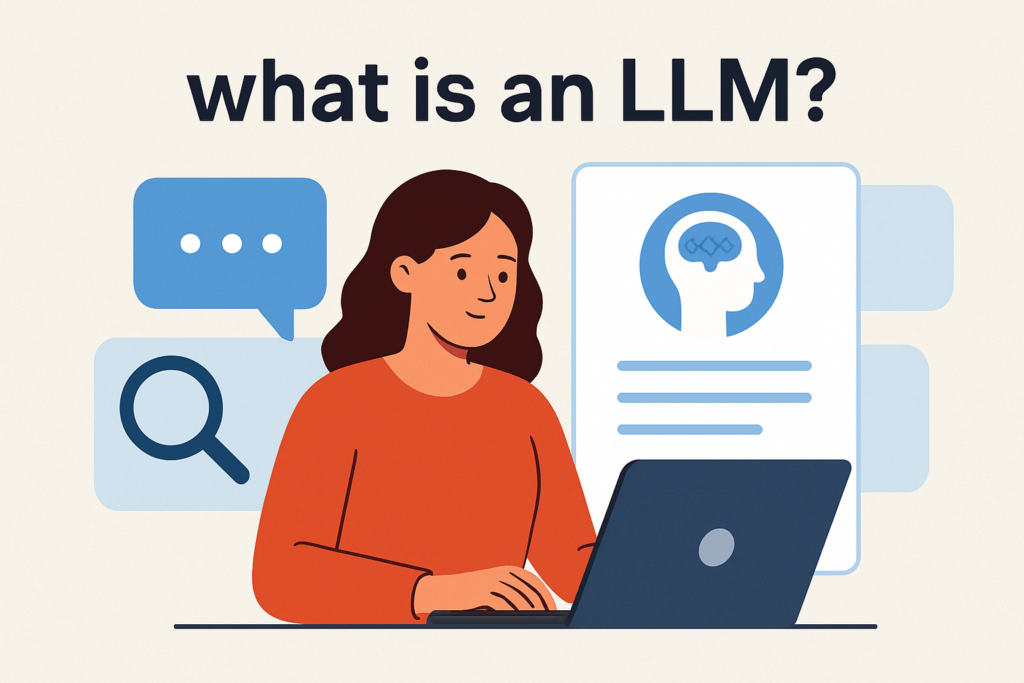
LLM stands for Large Language Model. A large language model is a type of artificial intelligence designed to understand, generate, and respond to human language.
Instead of following rigid rules, LLMs learn patterns from massive amounts of text data. This allows them to:
- Answer questions
- Write coherent paragraphs
- Summarize content
- Translate languages
- Hold natural conversations
In short, an LLM is trained to predict what text should come next based on context, making it feel surprisingly human.
How Large Language Models Are Trained (High Level)
LLMs are trained using huge datasets that include books, articles, websites, and other publicly available text. During training, the model learns grammar, facts, reasoning patterns, and relationships between words.
This process typically involves:
- Pre-training on massive datasets
- Fine-tuning to improve accuracy and safety
- Ongoing updates to refine performance
You don’t need to understand the math behind this to benefit from it—but knowing that LLMs are data-driven helps explain both their power and their limitations.
Examples of Popular LLMs
Some well-known large language models include:
- OpenAI’s GPT models
- Anthropic’s Claude
- Google’s Gemini
These models power many tools and services you may already use. For more technical background, you can explore resources from trusted authorities like:
Why LLMs Are Important for Websites
LLMs aren’t just impressive technology. They deliver real business value when used correctly.
Improved User Experience
Visitors no longer want to search endlessly for answers. LLM-powered chatbots and assistants can respond instantly, guide users to the right information, and reduce frustration.
Content Creation and Optimization at Scale
Large language models can help draft blog posts, product descriptions, FAQs, and landing pages. While human review is still essential, LLMs significantly reduce the time it takes to create high-quality content.
Better Customer Support
AI-powered support tools can handle common questions 24/7, freeing up human teams to focus on complex issues. This improves response times and customer satisfaction.
Competitive Advantage
Websites that adopt LLM technology early often gain an edge through better engagement, lower operational costs, and faster experimentation.
Common Use Cases of LLMs on Websites
LLMs are flexible and can be applied across many website functions.
AI Chatbots and Virtual Assistants
These tools answer questions, guide users through processes, and provide support without human intervention.
Content Generation
LLMs can assist with:
- Blog writing
- Email drafts
- Product descriptions
- Knowledge base articles
Search and Recommendations
Some websites use LLMs to enhance search functionality, allowing users to ask questions in natural language instead of relying on exact keywords.
Lead Qualification and Forms
LLMs can interactively gather information from users, qualifying leads before handing them off to sales teams.
Multilingual Support
Large language models can translate and localize content, helping websites reach global audiences without building separate language teams.
How to Use an LLM on Your Website (Beginner-Friendly)
No-Code Options
Many tools allow website owners to add LLM functionality without writing code. Examples include:
- AI chat widgets
- CMS plugins
- Customer support platforms with built-in AI
These are ideal for small businesses or teams without technical resources.
Low-Code and API Integrations
For more customization, developers can integrate LLMs using APIs. This allows you to:
- Train responses on your own content
- Customize workflows
- Control tone and behavior
Choosing the Right LLM
When evaluating options, consider:
- Cost and pricing structure
- Data privacy policies
- Accuracy and reliability
- Ease of integration
Data Privacy and Security
It’s important to understand how user data is handled. Reputable providers publish clear documentation on data usage and compliance.
Authoritative guidance on AI governance can be found at:
Best Practices for Using LLMs Effectively
- Keep Humans in the Loop
- LLMs should assist, not replace human judgment. Always review critical outputs.
- Learn Basic Prompt Design
- Clear instructions produce better results. Even small changes in wording can dramatically improve responses.
- Monitor Accuracy
- LLMs can occasionally produce incorrect information. Regular testing helps reduce errors.
- Iterate and Improve
- Treat LLM usage as an ongoing process, not a one-time setup.
Challenges and Limitations to Be Aware Of
While powerful, LLMs are not perfect.
- They may hallucinate or provide outdated information
- Costs can increase with heavy usage
- Over-automation can reduce authenticity
- Legal and compliance issues may apply in regulated industries
Understanding these limitations helps set realistic expectations.
Getting Started with LLMs Today
LLMs are transforming how websites create content, support users, and deliver personalized experiences. Understanding the LLM meaning and practical applications puts you in a strong position to adapt and compete.
You don’t need to implement everything at once. Start small, test carefully, and build from there.
If you have questions about how LLMs could work for your specific website or business goals, contact Amanda to explore your options and get expert guidance tailored to your needs.
Frequently Asked Questions
What is an LLM in simple terms?
An LLM is an AI system trained on large amounts of text to understand and generate human-like language.
How are LLMs different from traditional chatbots?
Traditional chatbots follow rules, while LLMs generate responses dynamically based on context and training data.
Are LLMs safe to use on websites?
Yes, when used responsibly with proper data controls and human oversight.
Do I need a developer to use an LLM?
Not always. Many no-code tools make it easy to add LLM features without technical skills.
Can LLMs replace human writers or support teams?
LLMs are best used as assistants, not replacements. Human expertise remains essential.