
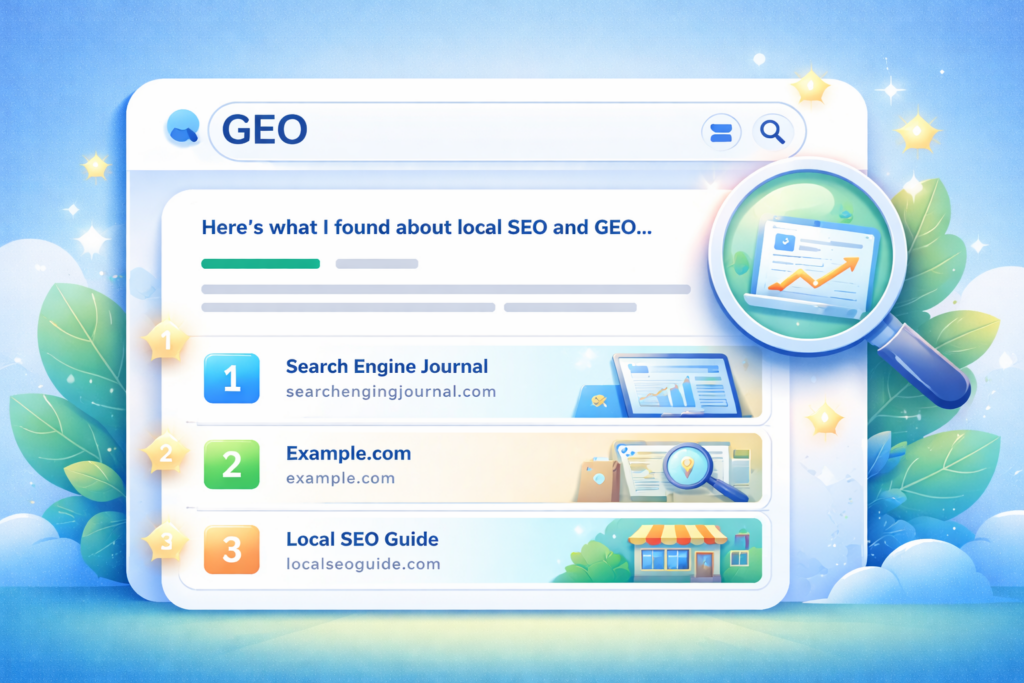
If you’ve been in digital marketing long enough, you’ve probably seen the newest acronym making the rounds: GEO; It stands for Generative Engine Optimization.
And while it sounds like something brand new and disruptive, the truth is much simpler. GEO isn’t a replacement for SEO. It’s not a separate strategy. It’s not a magical new playbook.
It’s an evolution of the same local marketing principles businesses have been using for years — just applied to AI-driven search environments like Google AI Overviews, Bing Copilot, ChatGPT browsing results, and other generative systems.
Let’s break down what GEO really means, and why if you’ve been doing strong local marketing, you’re already halfway there.
What Does GEO Mean?
Instead of focusing only on ranking web pages in traditional search results, GEO centers on positioning your brand so generative AI systems can confidently reference, summarize, or cite your content in their responses.
It’s about making your business easy for AI to understand, validate, and trust.
Where SEO traditionally optimized for links and rankings, GEO optimizes for inclusion in AI-generated answers — the summaries, comparisons, and recommendations users now see before they ever click a website.
Why GEO Feels New (But Really Isn’t)
Generative search changes how results are displayed. Instead of showing ten links, AI systems summarize content and sometimes cite sources directly.
That makes businesses nervous.
It also makes some marketers act like everything we knew about optimization suddenly stopped working.
It didn’t.
Generative engines still look for:
- Clear topical authority
- Strong entity signals
- Consistent brand mentions
- High-quality, well-structured content
- Trusted backlinks
- Accurate business information
If that sounds familiar, it should. Those are the same pillars that have powered local SEO and content marketing for over a decade.
How GEO Aligns With Local Marketing Optimization
If you’ve optimized for local search before, you’ve already implemented many GEO-aligned strategies without calling them that.
Let’s connect the dots.
1. Consistent NAP and Entity Clarity
For years, local SEO has emphasized consistent Name, Address, and Phone number (NAP) across directories and citations.
Why?
Because search engines use consistency to confirm business legitimacy and entity identity.
Generative engines do the same thing. They rely on structured, consistent data across the web to understand who you are.
If your business name appears three different ways across the internet, AI systems get confused. If your brand is clearly defined everywhere, you’re easier to reference.
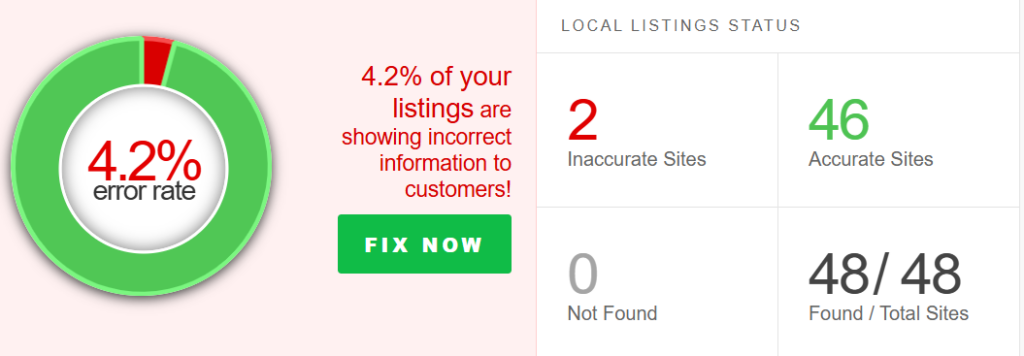
That’s GEO in action — built on traditional local SEO foundations.
2. Google Business Profile Optimization
Your Google Business Profile has long been critical for local visibility.
It reinforces:
- Location relevance
- Services offered
- Reviews and trust signals
- Business category clarity
Generative systems pull heavily from structured data sources like Google Business Profiles when forming answers about local services.
If you’ve optimized categories, added services, uploaded photos, and encouraged reviews, you’re already strengthening your GEO positioning.
3. Structured Data and Schema
Schema markup has been around for years. LocalBusiness schema, FAQ schema, Service schema — all designed to help search engines understand context.
Generative engines love structured data.
When your content is marked up properly, AI systems can extract clean, contextual information more easily. That increases the likelihood of your brand being referenced in summaries or answer boxes.
Again, not new. Just newly appreciated.
4. Topical Authority and Content Depth
Local businesses that publish helpful content — service guides, FAQs, comparisons, seasonal advice — build authority in their niche.
Generative engines favor depth and clarity. They’re designed to synthesize content from authoritative sources.
If your HVAC company has detailed guides on AC repair, heat pump maintenance, and emergency troubleshooting in your city, you’re far more likely to be included in AI-driven responses than a thin five-page brochure site.
GEO rewards what strong content marketing has always rewarded.
5. Reviews and Reputation Signals
For local marketing, reviews have always mattered.
- They build trust.
- They influence click-through rates.
- They affect rankings in local packs.
Generative engines increasingly factor reputation signals into their assessment of business credibility. Strong, consistent reviews reinforce authority in both traditional search and AI environments.
Trust still wins.
The Real Difference Between SEO and GEO
Here’s the simplest way to understand it:
SEO optimizes for ranking pages.
GEO optimizes for being referenced as a trusted source.
But both rely on the same fundamentals:
- Clear website structure
- Technical crawlability
- High-quality content
- Entity clarity
- Consistent brand signals
- Trust and authority
You don’t need a brand-new strategy. You need to ensure your current strategy is technically sound and authoritative enough to be cited.
What Businesses Should Focus on Now
Instead of chasing every new acronym, focus on strengthening the foundation.
Improve Technical Health
Generative engines still rely on crawlable, accessible content. Make sure your site:
- Loads quickly
- Is mobile-friendly
- Has clean internal linking
- Doesn’t block critical resources
Technical SEO is still critical.
Clarify Services and Locations
If you’re a local service provider, clearly define:
- What services you offer
- What geographic areas you serve
- What makes you different
Avoid vague language. AI systems prefer clarity over fluff.
Build Real Authority
- Publish content that answers real questions.
- Get mentioned by local organizations.
- Earn links from reputable sources.
- Encourage reviews from real customers.
Authority isn’t built overnight — and generative engines are trained to recognize authenticity.
Avoid Over-Optimization
Chasing GEO specifically can lead to awkward, robotic content.
- Don’t write for AI.
- Write for people.
Clear, helpful, well-structured content naturally performs better in both search and generative results.
The Big Takeaway
GEO isn’t a revolution. It’s a refinement.
If you’ve invested in strong local marketing — optimized your Google Business Profile, built citations, improved site structure, created useful content, and earned trust — you are already aligned with generative search.
The businesses that will win in this next phase aren’t the ones chasing trends. They’re the ones with strong foundations.
If you’re unsure whether your site is positioned well for both traditional SEO and GEO visibility, contact Amanda to evaluate your current strategy and identify practical next steps.
FAQs
What does GEO stand for?
GEO stands for Generative Engine Optimization, which focuses on optimizing content and brand presence for AI-driven search systems.
Is GEO different from SEO?
GEO builds on SEO fundamentals. It focuses on being cited in AI-generated responses rather than just ranking in traditional search results.
Do local businesses need GEO?
Yes, but in most cases, strong local SEO practices already support GEO performance.
How can I improve GEO visibility?
Focus on technical health, structured data, content depth, consistent brand signals, and building authority in your niche.
Is GEO replacing SEO?
No. GEO is an evolution of SEO within generative search environments, not a replacement.