
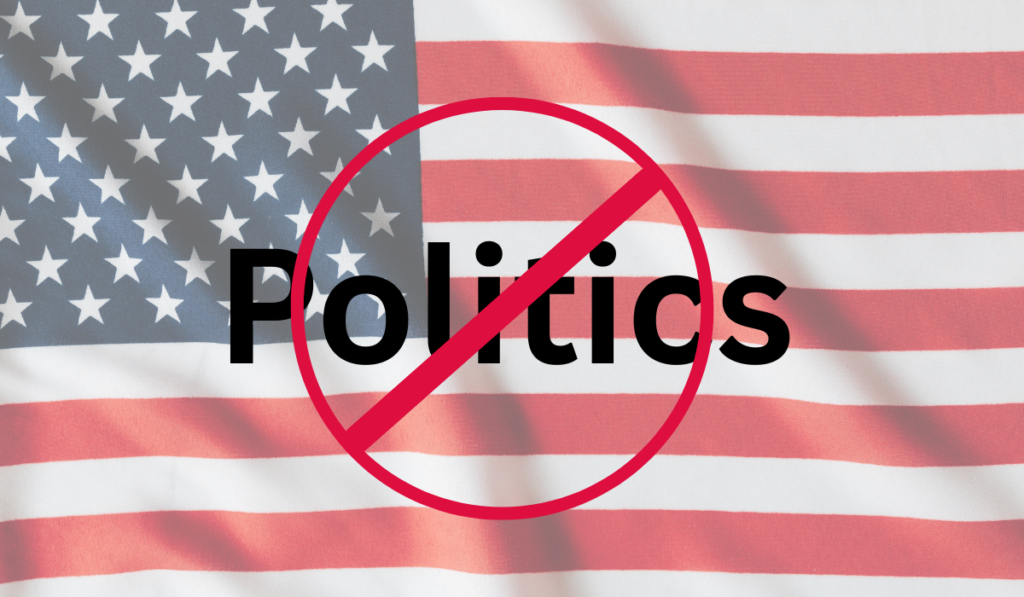
In a time when politics seems to bleed into every corner of daily life, it’s no surprise that brands feel pressure to “take a stand.” What used to be optional now feels expected—and that expectation is exactly where many businesses go wrong. Social media rewards bold opinions. Audiences applaud authenticity. And some companies have built entire identities around values-driven messaging.
But here’s the unpopular opinion: for most businesses, mixing personal or partisan political views into marketing is a bad idea.
Unless your business is explicitly political—or your product exists to serve a specific political movement—bringing your political views into your marketing efforts creates more risk than reward.
Let’s break down why.
Your Customers Are Not a Monolith
One of the biggest mistakes brands make is assuming their audience thinks like they do.
In reality, your customers come from:
- Different political parties
- Different belief systems
- Different cultural and socioeconomic backgrounds
When you inject partisan political messaging into your marketing, you’re implicitly telling a large portion of your audience: “This brand may not be for you.”
Even if your message resonates strongly with some customers, it will likely alienate others—often about half of your potential market.
Marketing is about widening the door, not narrowing it.
Alienation Is Expensive
Every political statement carries a cost.
That cost might look like:
- Lost customers who quietly stop buying
- Prospects who never convert because they feel unwelcome
- Long-term brand damage that’s difficult to measure but very real
The most dangerous part? Many customers won’t tell you why they left. They’ll just leave.
In competitive markets, voluntarily shrinking your audience is rarely a smart move.
Values ≠ Politics
There’s an important distinction many businesses blur: values are not the same as politics.
You can:
- Treat people with respect
- Support ethical business practices
- Care about sustainability, inclusion, or transparency
…without endorsing political parties, candidates, or polarizing policy positions.
Strong brands are built on universal values, not partisan talking points.
When values turn into political signaling, the message shifts from “this is what we stand for” to “this is who we’re against.”
The Authenticity Trap
A common counterargument is: “But authenticity matters—customers want to know what we believe.”
That’s true, to a point.
Authenticity in marketing doesn’t require sharing every personal belief. It requires:
- Being honest about what you offer
- Delivering on your promises
- Communicating clearly and consistently
Oversharing political opinions under the banner of authenticity often benefits the brand’s ego more than its customers.
Not every belief needs a billboard.
When Political Marketing Does Make Sense
To be clear, this isn’t an argument that political marketing never works. It’s an argument that it works only when it’s aligned with the business model—not when it’s bolted on for attention.
There are exceptions—and they’re important.
We’ve all seen examples on both ends of the spectrum:
Some brands, like Ben & Jerry’s, have successfully woven political activism into their identity because it has been central to their brand for decades. Their customers expect it, and the messaging aligns with their long-established values.
On the other hand, there are countless examples of companies outside politics—from consumer brands to service providers—posting sudden, polarizing takes that feel reactive or performative. These moments often result in backlash, boycotts, or quiet customer attrition that never shows up in analytics dashboards.
Political messaging may be appropriate if:
- Your business is explicitly political or advocacy-based
- Your product exists to serve a specific political cause or movement
- Your target audience is intentionally narrow and aligned by ideology
In those cases, political alignment is part of the value proposition.
But for most small businesses, service providers, SaaS companies, retailers, and creators, politics is not the product.
Focus on What Unites, Not What Divides
At its best, marketing answers a simple question:
How does this business make my life better?
Politics rarely helps answer that.
Clear messaging, great service, and genuine value are far more powerful than political alignment. They transcend ideology and speak to people as customers—not voters.
A More Practical Way to Think About It
If this feels overly cautious, consider the upside of restraint: neutrality allows your marketing to travel farther. It keeps the focus on what you sell, who you serve, and why you’re good at it—rather than on debates your business can’t win.
Choosing not to include political views in your marketing isn’t cowardice. It’s strategy.
It’s a recognition that:
- Your audience is diverse
- Your goal is growth, not division
- Your business exists to serve customers, not score points
Unless politics is central to what you sell, the safest—and smartest—move is to leave it out of your marketing entirely.
Your customers didn’t come to you for a political lecture.
They came for value.
And that’s where your message should stay.